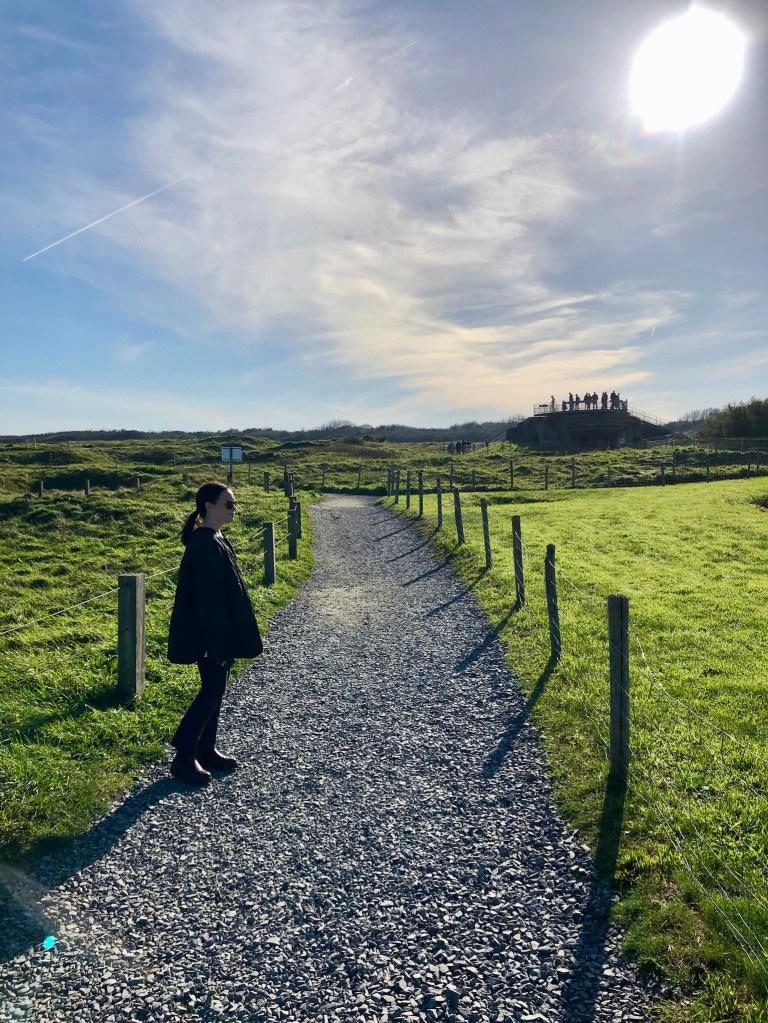
Last November, for Veterans Day weekend we planned a special trip to Normandy, France to visit the D-Day landing beaches and other WWII historic sites.
The Normandy region of France lies Northwest of Paris, and while there are several areas we could choose to stay, we booked a bed and breakfast in Bayeux, France, about 3 hours from Paris. We flew into Paris Charles de Gaulle on Friday afternoon and rented a car to drive to Bayeux. We arrived around 7pm and were greeted by Pascal, the owner of the home. His home is beautiful, quaint, and the perfect home base for a weekend in the Normandy area.
Saturday morning we woke up early and Pascal had a wonderful breakfast waiting for us – rice pudding, croissants, bread, jams, cheeses, ham, and coffee. We booked a private tour through Overlord Tours (a nod to “Operation Overlord”, which was the Allied codename for the Battle of Normandy) for the entire day to take us around to all of the D-Day sites. Our tour guide, Olivier, picked us up in his van at 8:30 and we headed to our first stop, Longues-sur-Mer battery, a German artillery battery located just outside the village of the same name, along a coastal cliffside. Four large guns surrounded by concrete and steel are still in place today. They were used for shelling the beaches on either side, but Olivier explained that the vital communications were cut here, so they weren’t used very successfully on D-Day, and the German crews surrendered to British troops the next day. Olivier started each stop by walking out to a good viewing area, telling us about some of the history that took place, showing us maps and pictures, and usually sharing some lesser-known facts or stories about the site with us. We then got time to walk around on our own and take it all in.
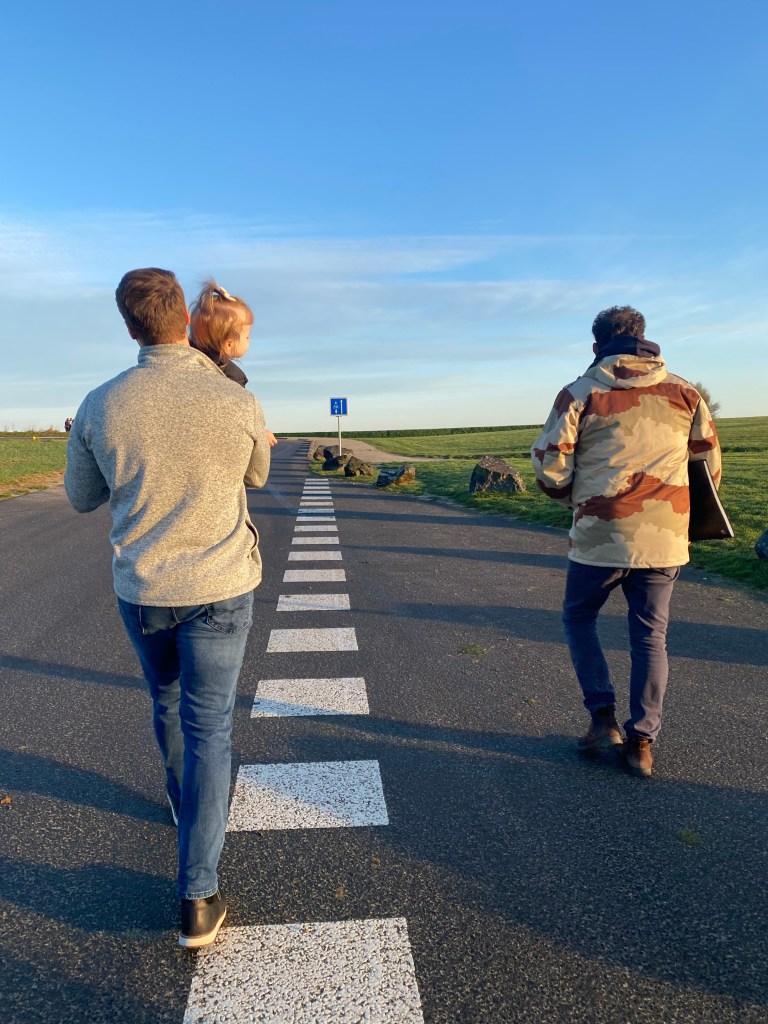
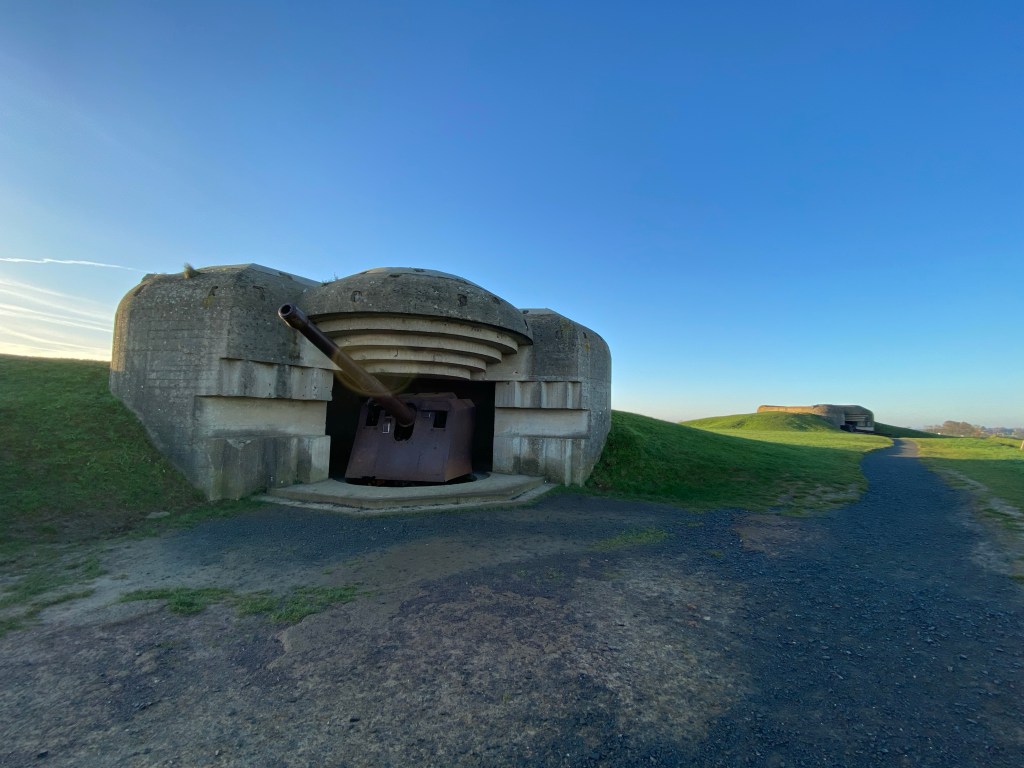
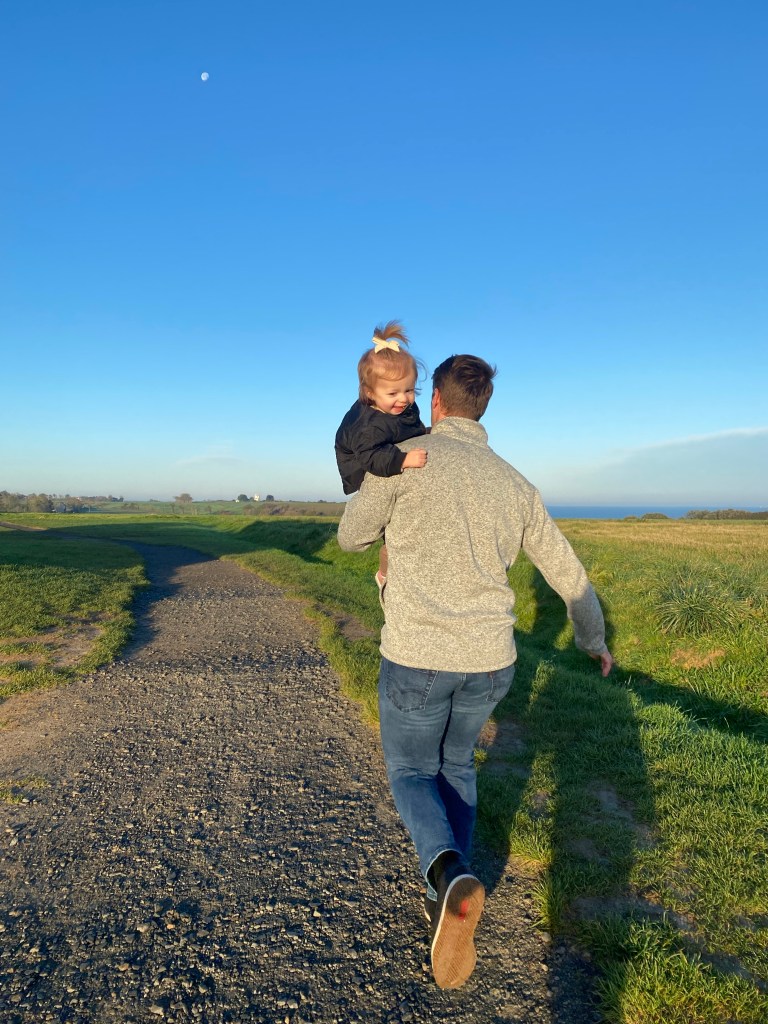
It was an odd feeling walking around the area. It was a beautiful, sunny day with no wind in the middle of November, and we walked from each gun looking out to the sea through the surrounding fields. It was ironic: the site was tranquil and picturesque, but standing there felt so heavy thinking of the events that took place there. I had a similar feeling at all of our other stops throughout the day. I was expecting a dreary, cold, rainy, and windy visit to all of these places, which it typically would be this time of year, weather to match the mood. But, we lucked out with a gorgeous day.
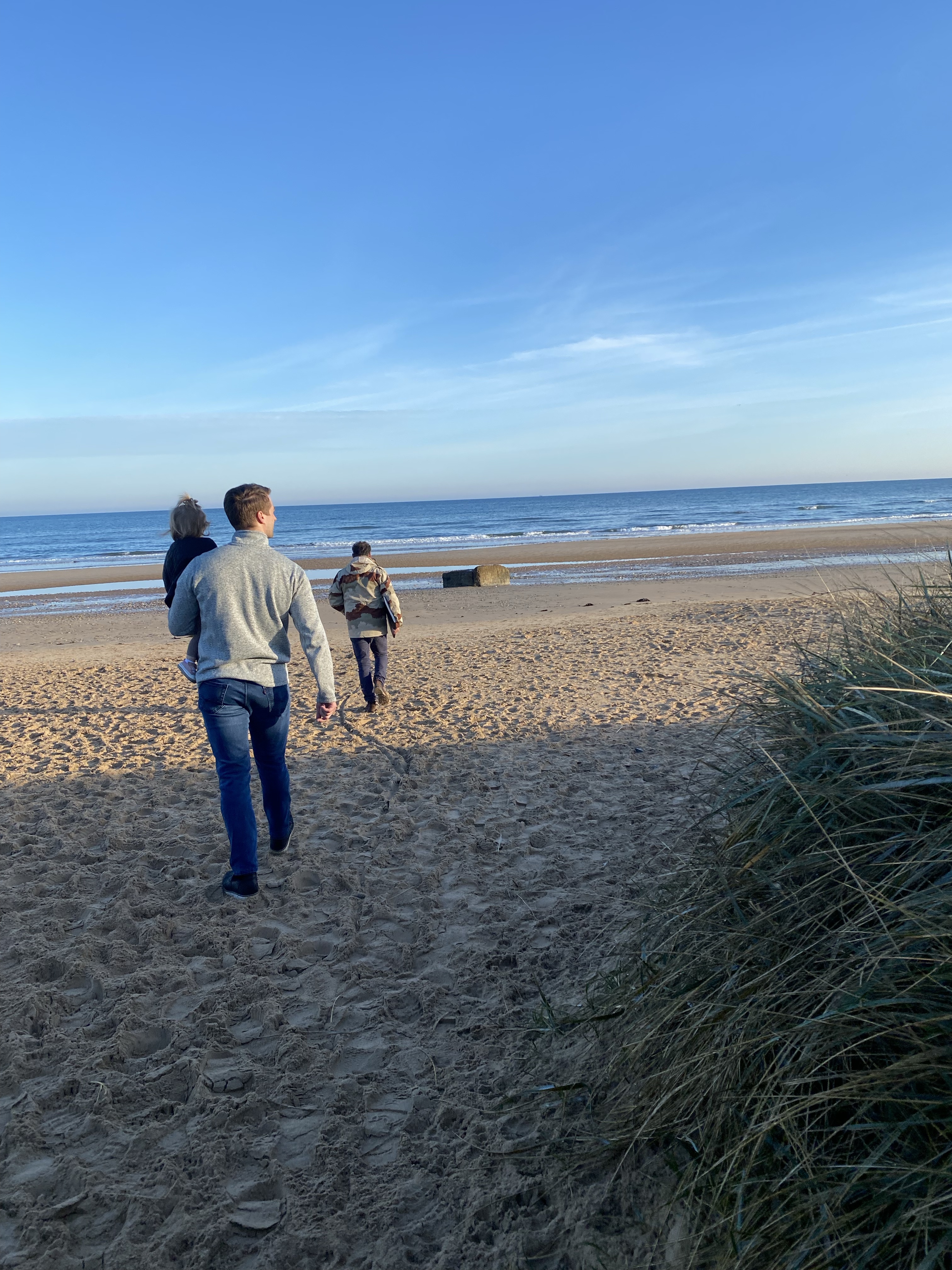
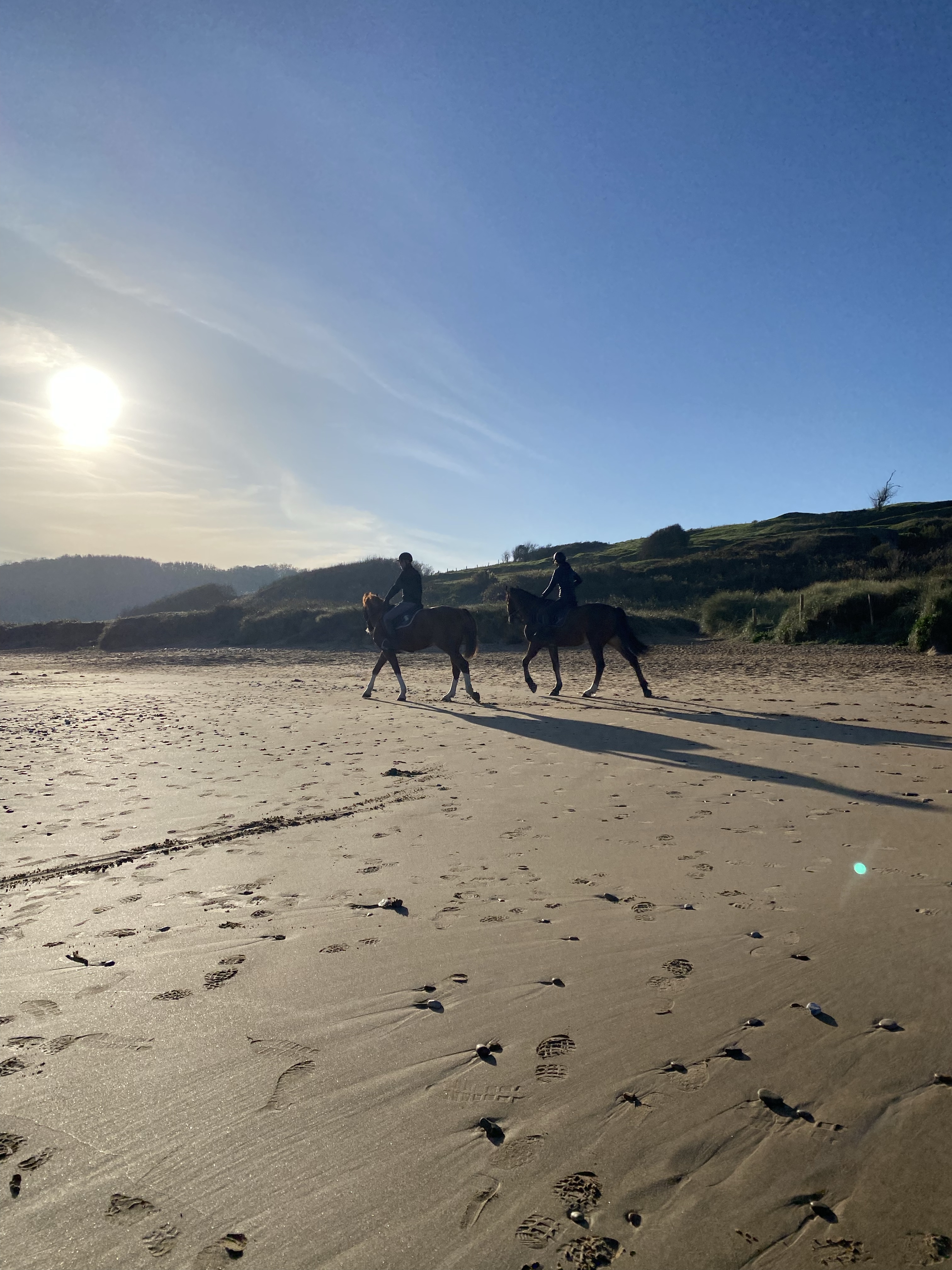
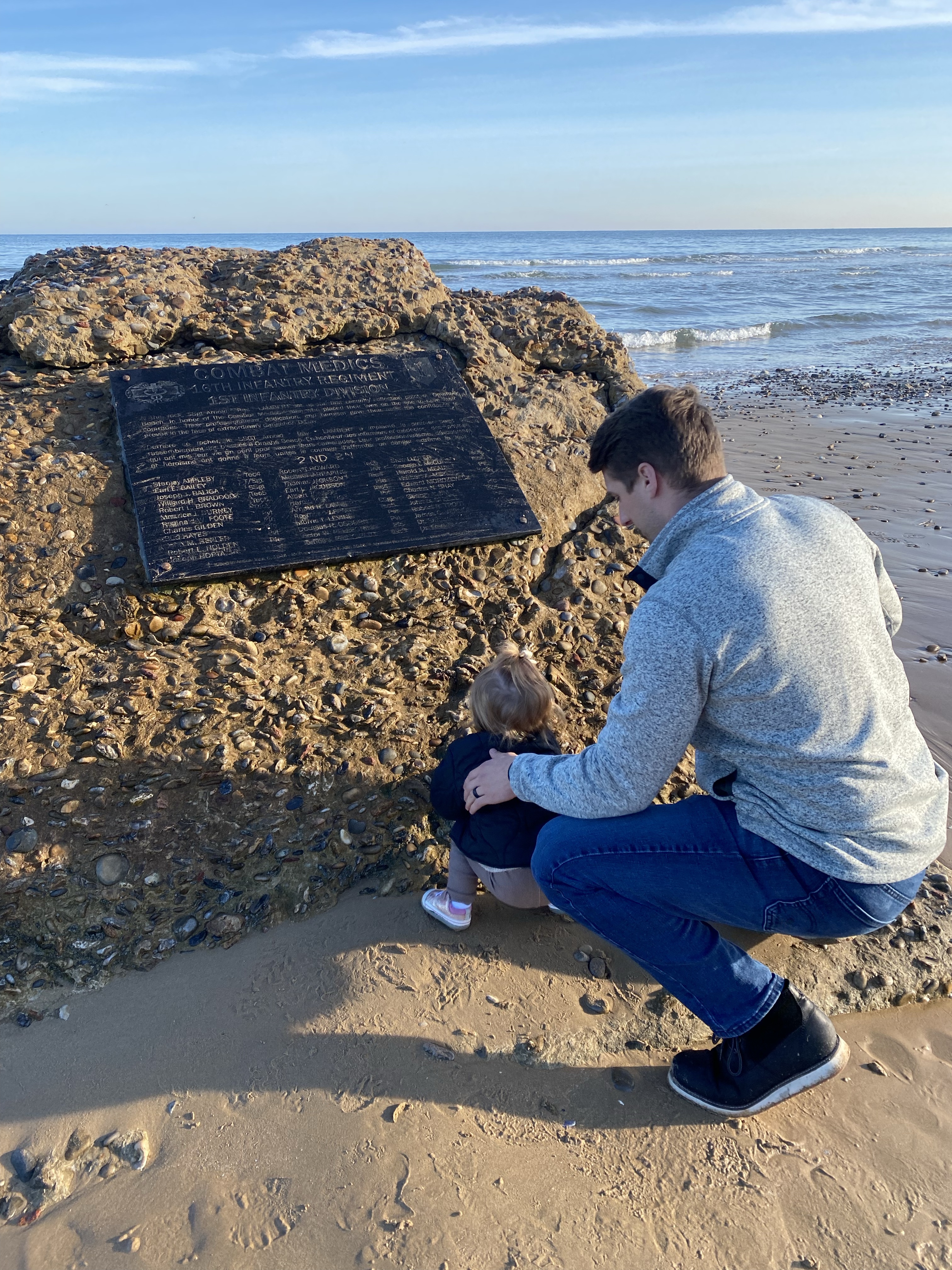
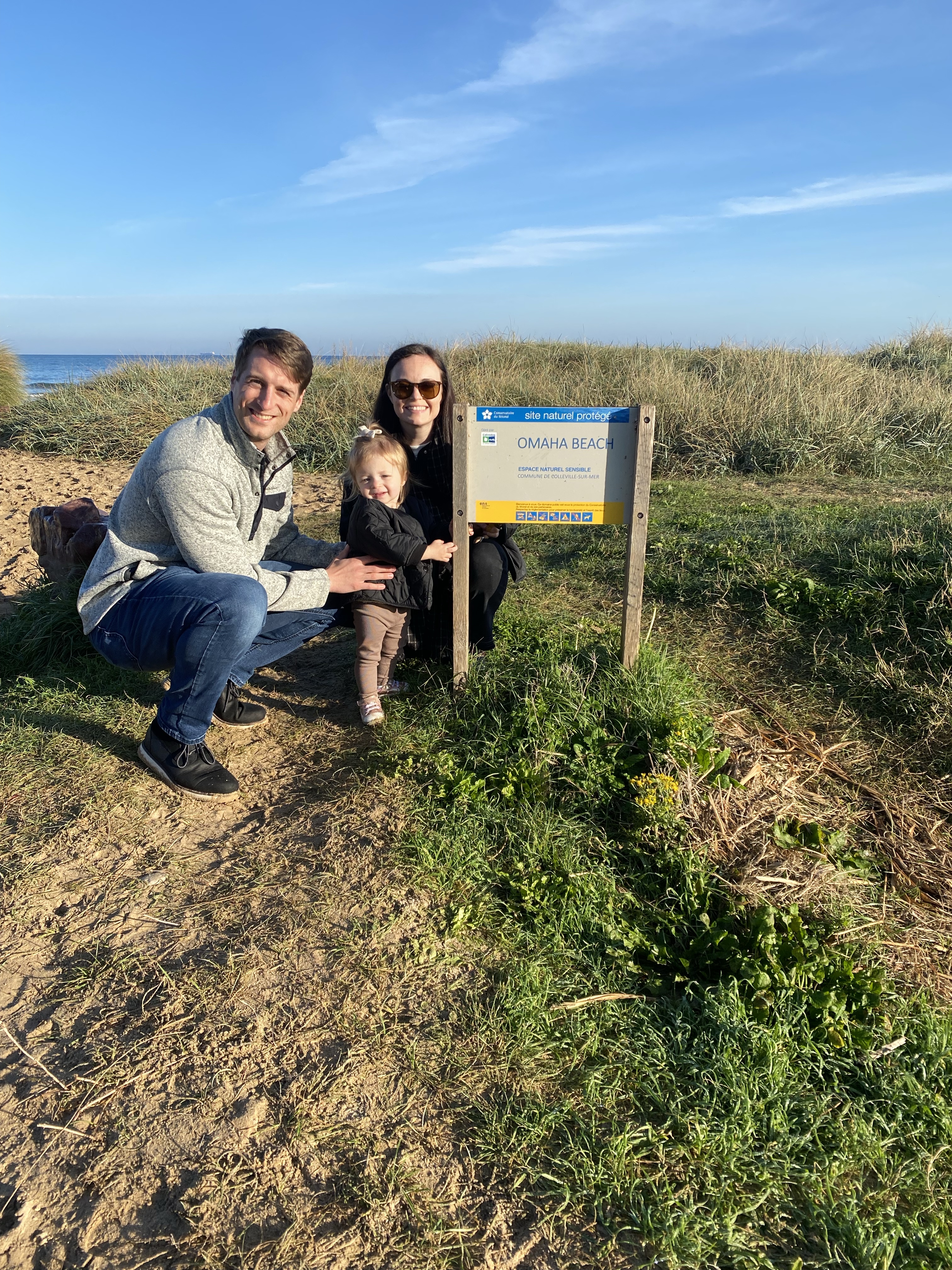
After the gun battery, we drove to Omaha Beach, and practically had the place to ourselves. Olivier joked that he reserved the beach for us. Omaha Beach was the site of the bloodiest fight on D-Day. Olivier talked us through some of the Allies’ strategy for the landings here, and of course what happened throughout the day. It was difficult to imagine the tragic events as we stood there on such a peaceful day. It was high tide, and Olivier told us the Allies attacked at low tide. Normandy has one of the largest tide differentials in the world, and he pointed to a spot about another football field away where low tide begins. There was already about a football field’s worth of beach, and it was sobering imagining what the soldier’s faced over such a distance. There is a small monument right on the beach to the American combat medics. From the beach, looking back toward land, you can spot the American cemetery just on top of the hill, which is where we headed next.
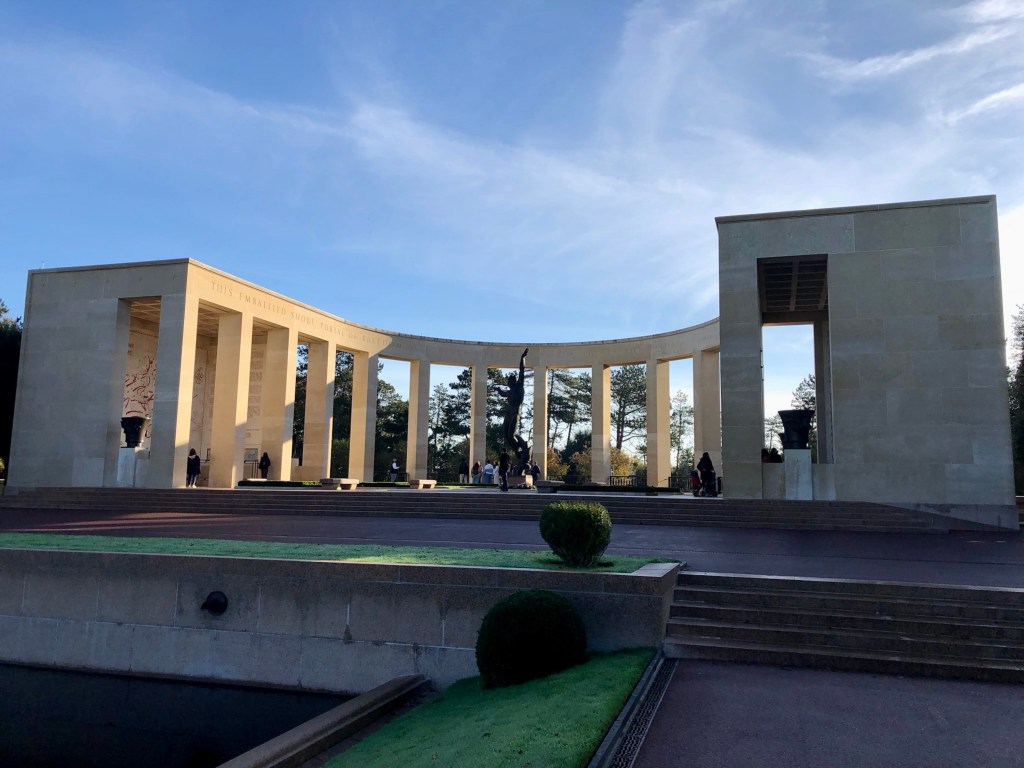
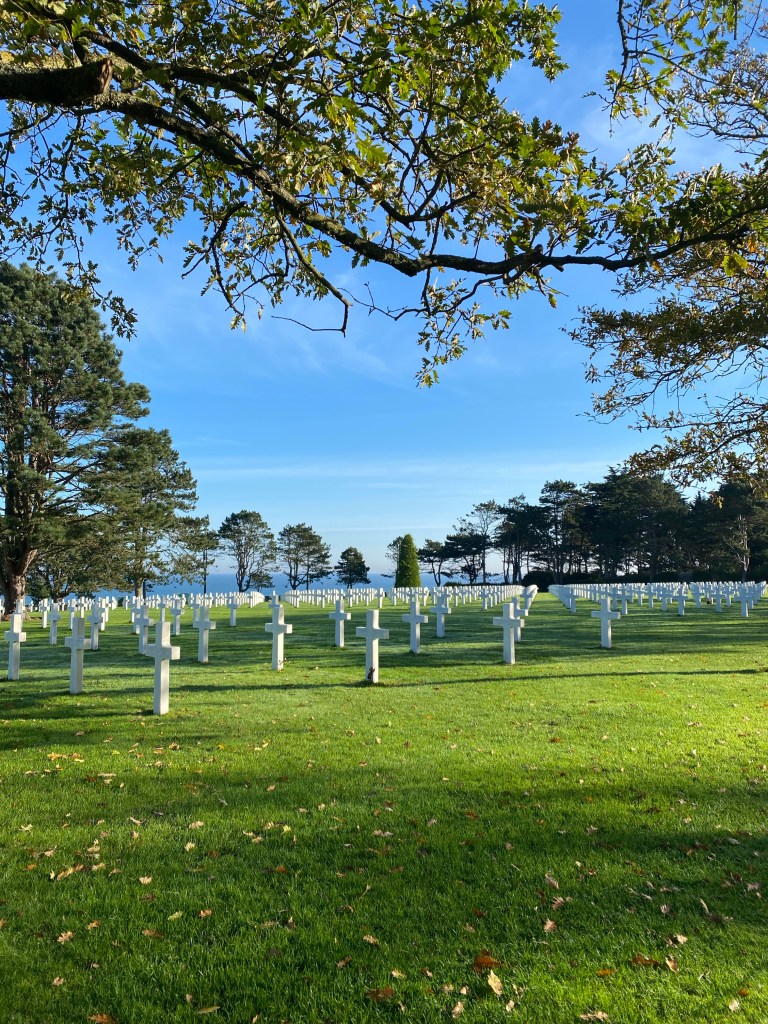
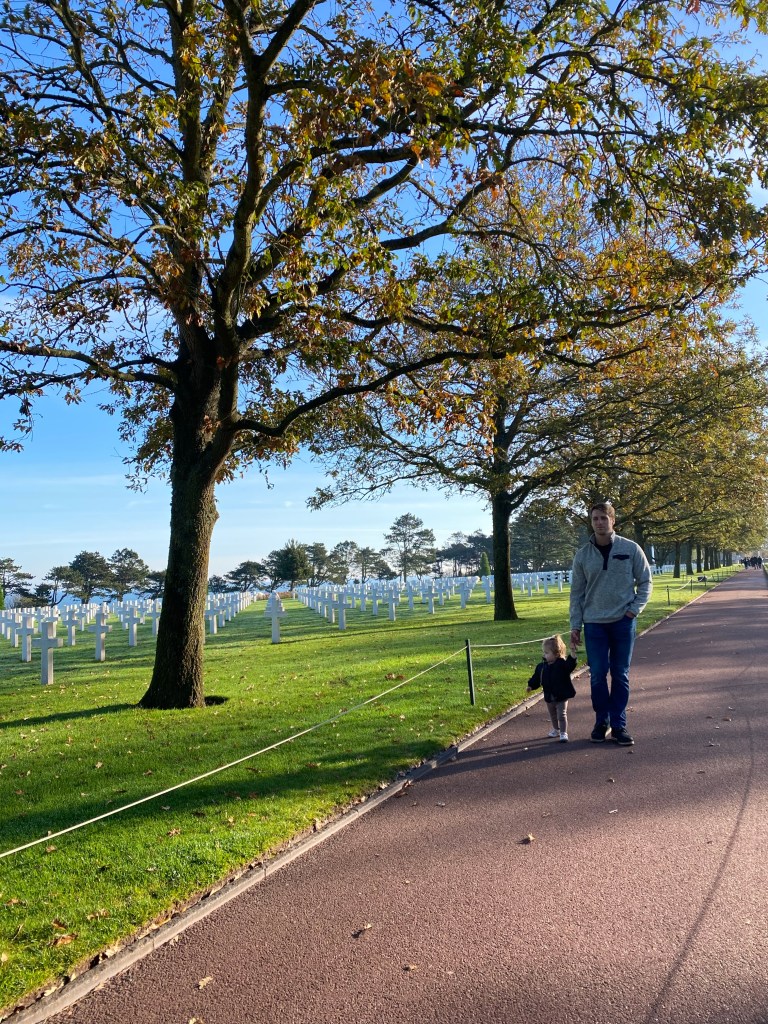
The land the American cemetery sits on was given to the American government from France to honor the armed forces who were killed during the Battle of Normandy and the remainder of the War. When you first approach the cemetery, there is a large memorial with maps depicting D-Day and following events, and a bronze statue in the center representing the spirit of the American youth. Behind the memorial is The Garden of the Missing – 1,557 soldiers’ names inscribed for soldiers whose remains were never recovered or identified. Bronze rosettes have been added next to the names of soldiers whose remains have since been recovered. The cemetery holds the graves of over 9,000 American soldiers, each marked with either a Latin cross or star of David. A few hundred graves belong to unidentified soldiers, marked with, “Here rests in honored glory a comrade in arms known but to God”. Seeing those was particularly humbling. There is a small chapel in the center, and you can look out to the beach and the sea as you walk through the cemetery.
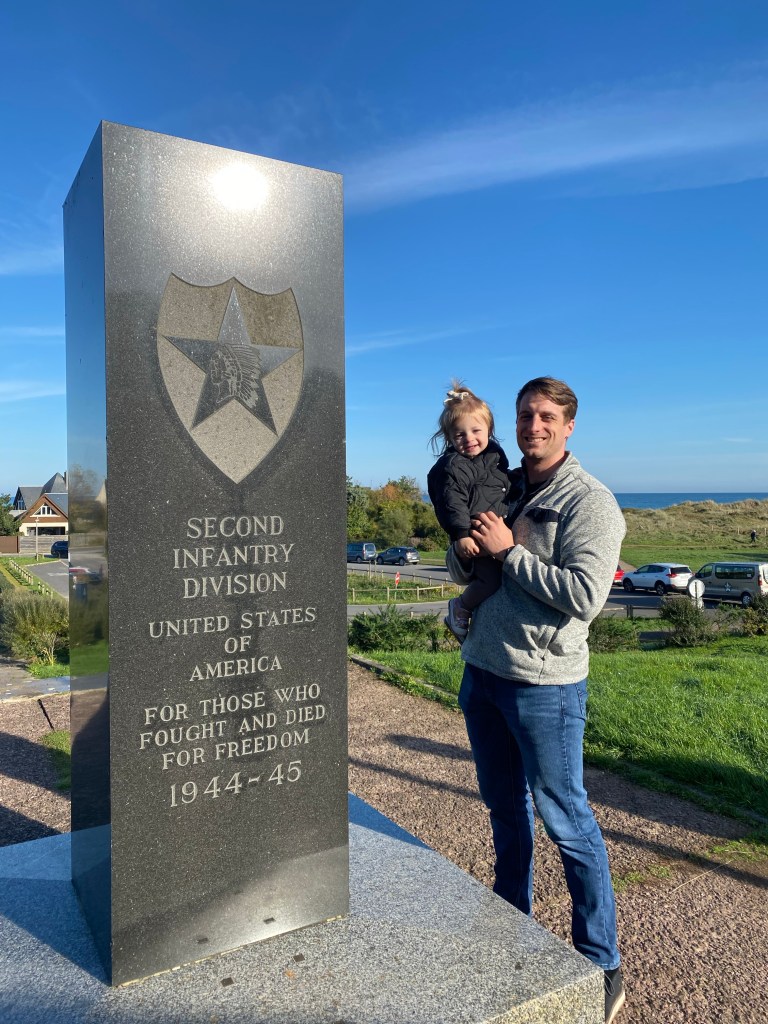
We made a short stop in Saint-Laurent-sur-Mer, where there is a small memorial for the 2nd Infantry Division (the unit Michael was in at JBLM in Washington), next to what was a German strong point. Soldiers from 2ID were responsible for its capture, and the site became the first American Headquarters on Omaha Beach following D-Day. The memorial honors those in the division who participated in the landings on Omaha Beach.
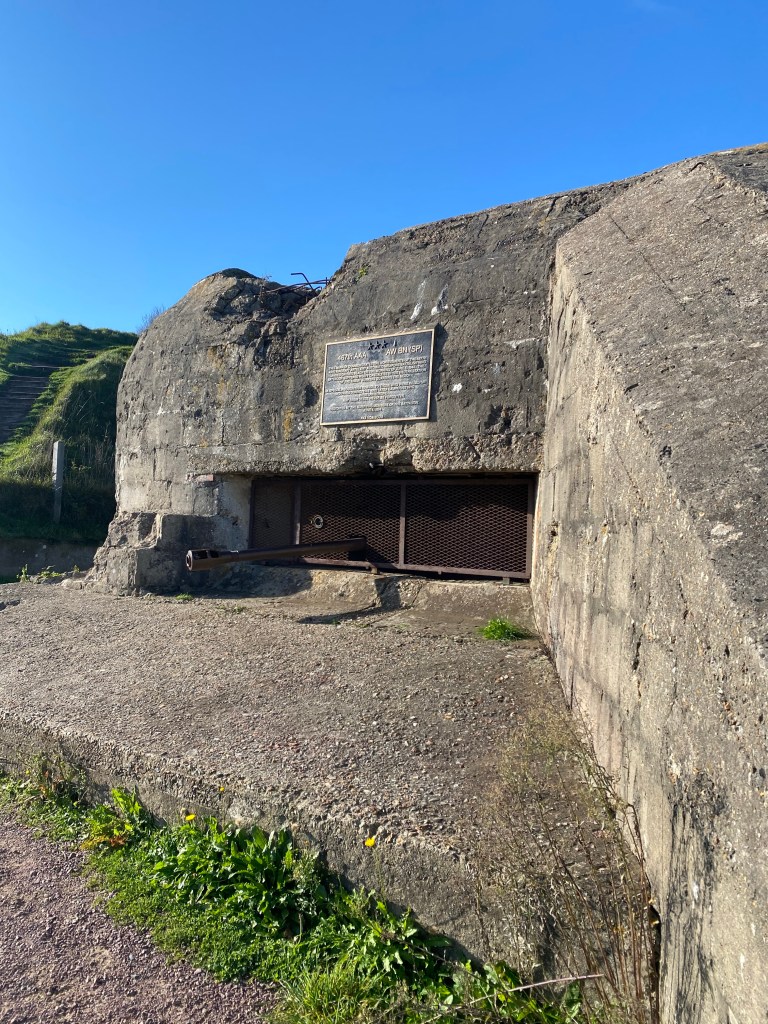
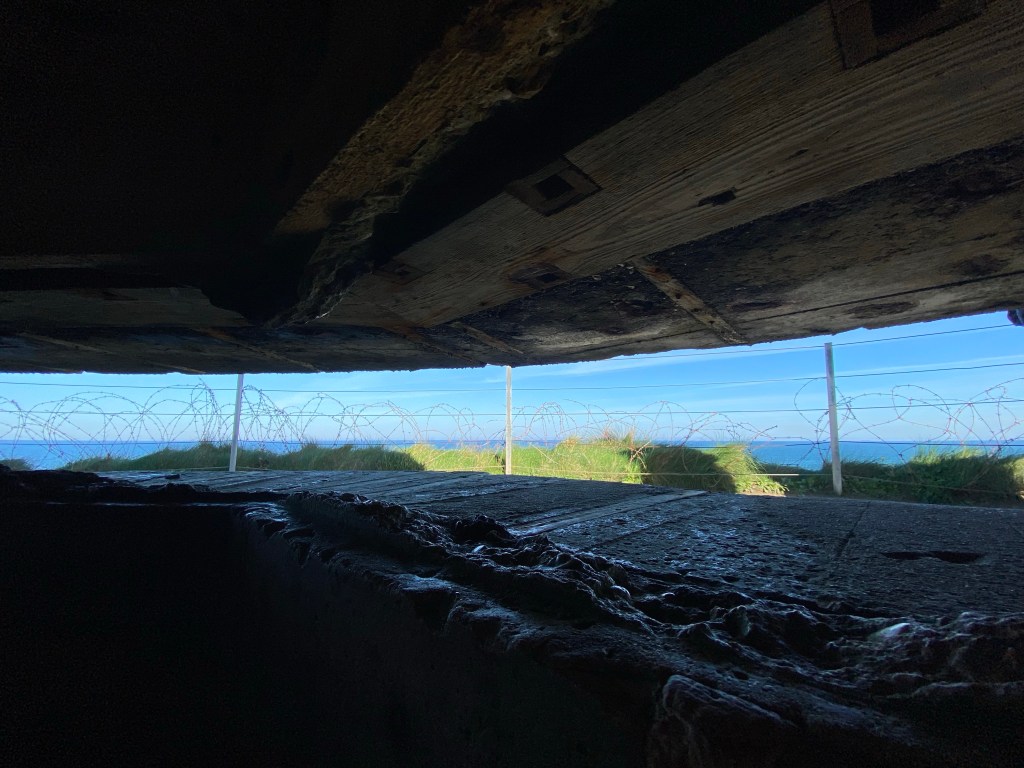
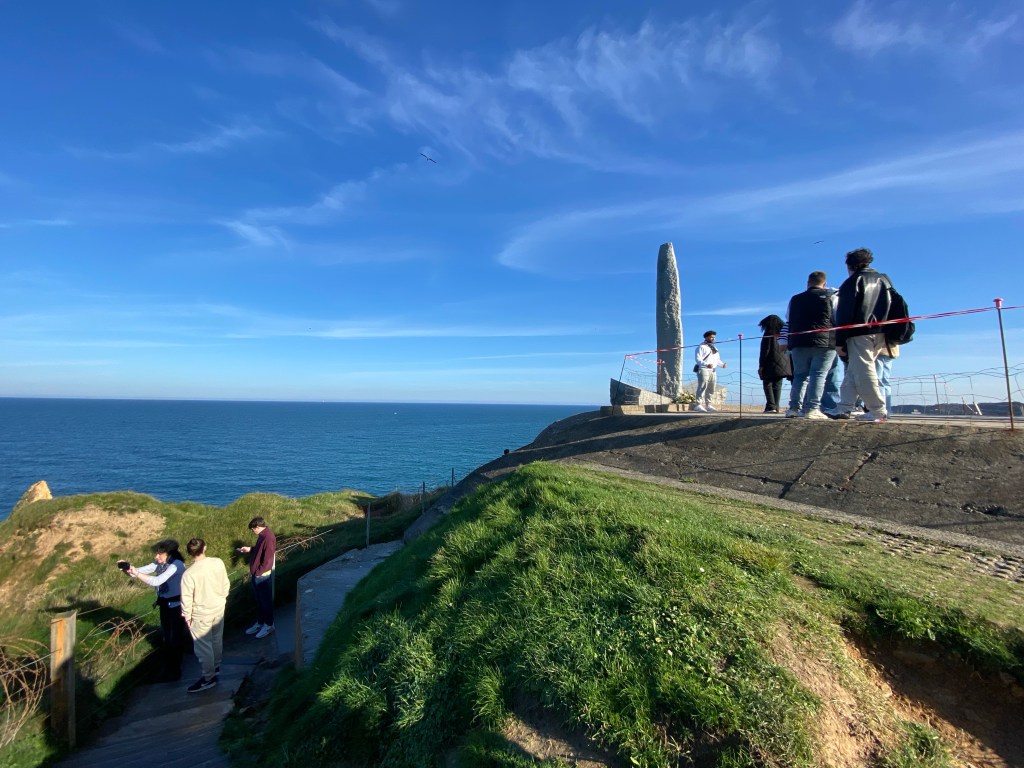
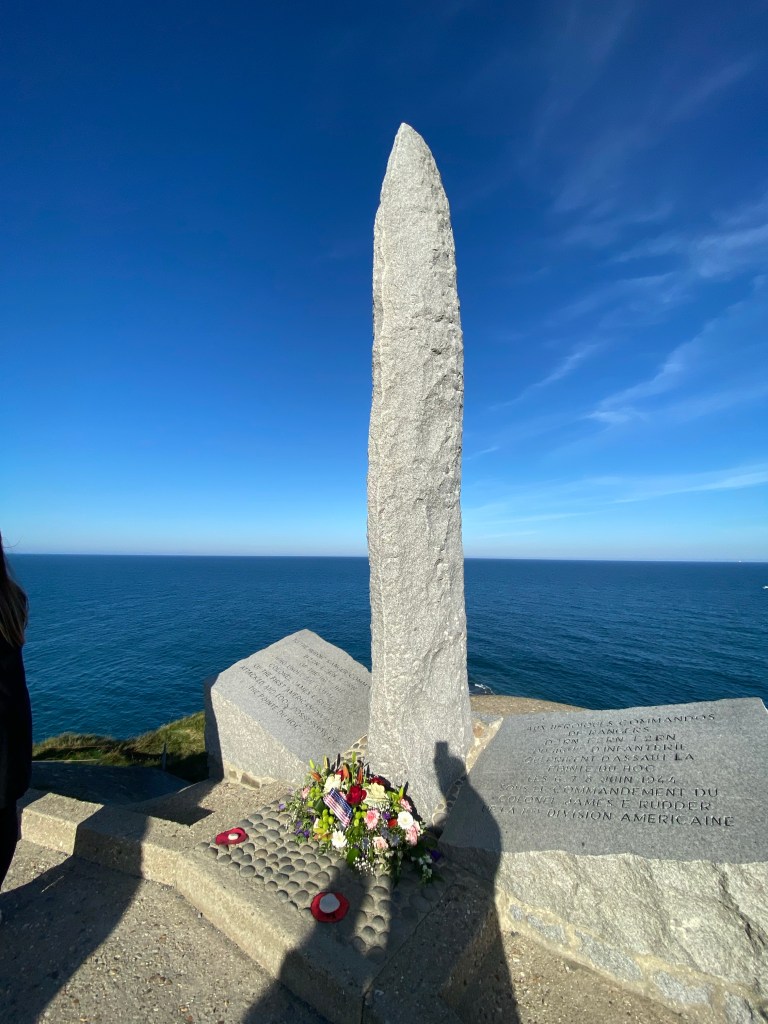
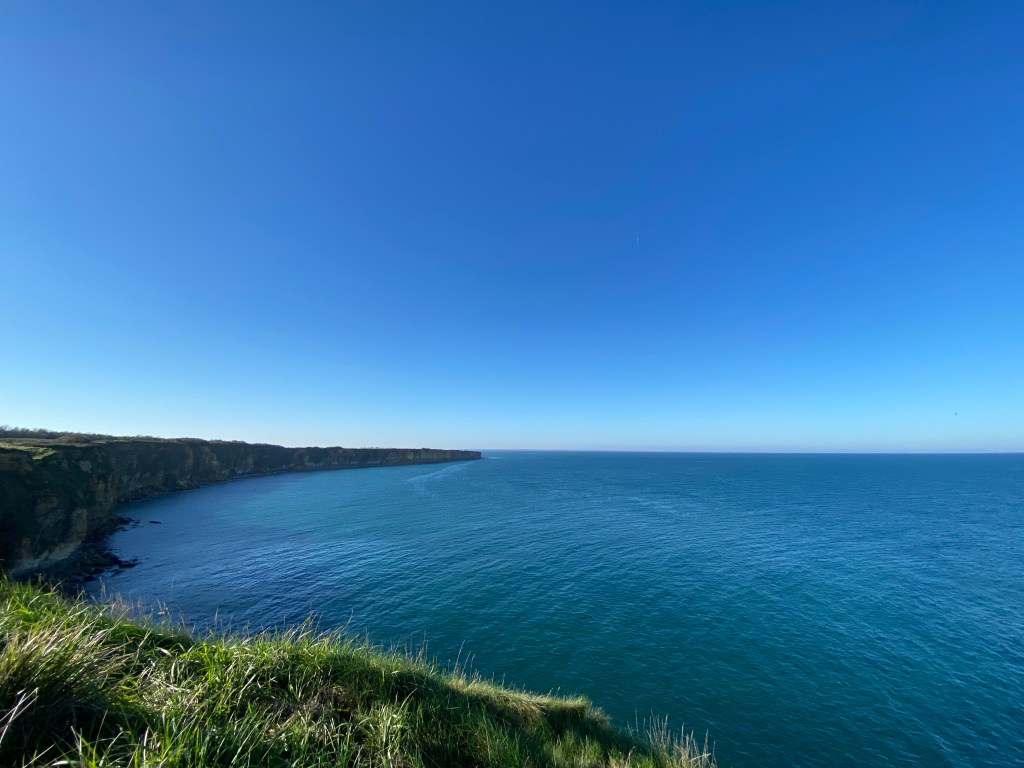
From here, we drove to Pointe du Hoc, another German machine gun post. The action that took place here on D-Day is well-known because of the Army Rangers that scaled the 100-foot cliffside to attack and capture the German post. There was extensive pre-planning and training for the operation, and it’s really one of the most interesting battles to read about. If you haven’t heard about this battle before, I highly recommend looking it up. The area is quite large, and the walking paths are roped off from all of the bomb craters. At the very edge of the cliffside is the command post, which we were able to walk through. There is now a memorial above the command post dedicated to the battle. Similarly to Omaha Beach, you don’t fully grasp what those soldiers did until you see it. Staring down those cliffs and seeing how far those men had to climb fixes that quickly.
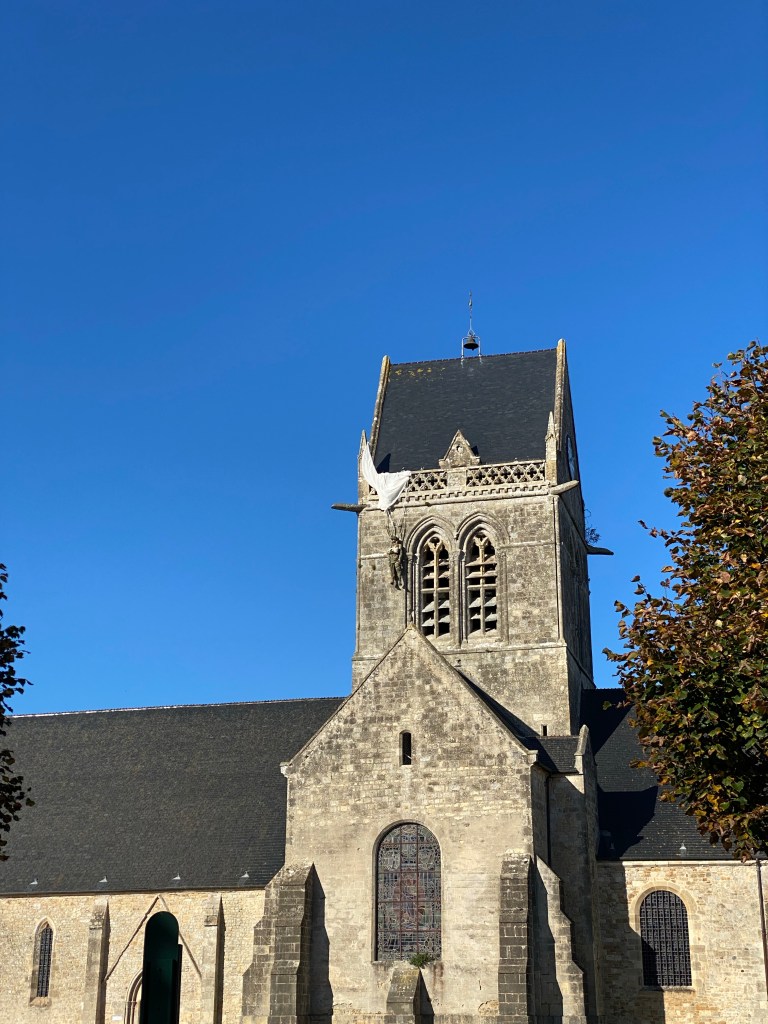
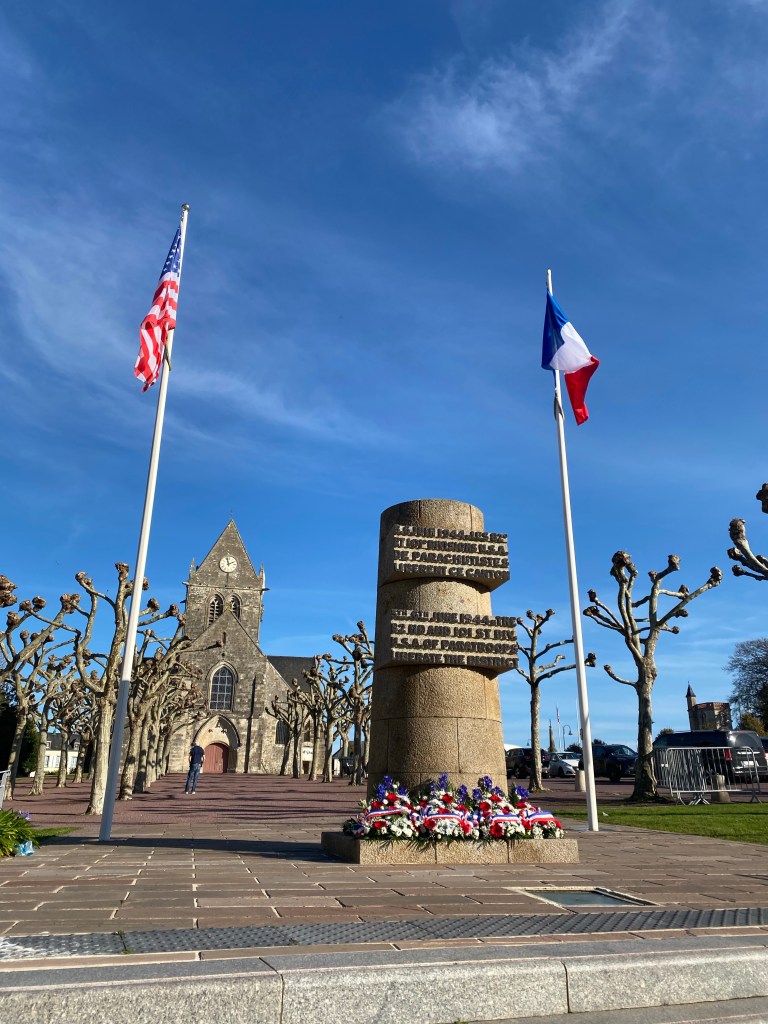
We stopped in Sainte-Mère-Église, a key location for the D-Day battles, and now home to the Airborne Museum, dedicated to the 82nd and 101st Airborne Divisions. Several paratroopers actually landed in the town on D-Day, and one famously got stuck on the church steeple, and today there is a monument to him, a paratrooper hanging with his parachute on the church steeple. We had a small lunch at a little cafe and had some time to walk around the town.
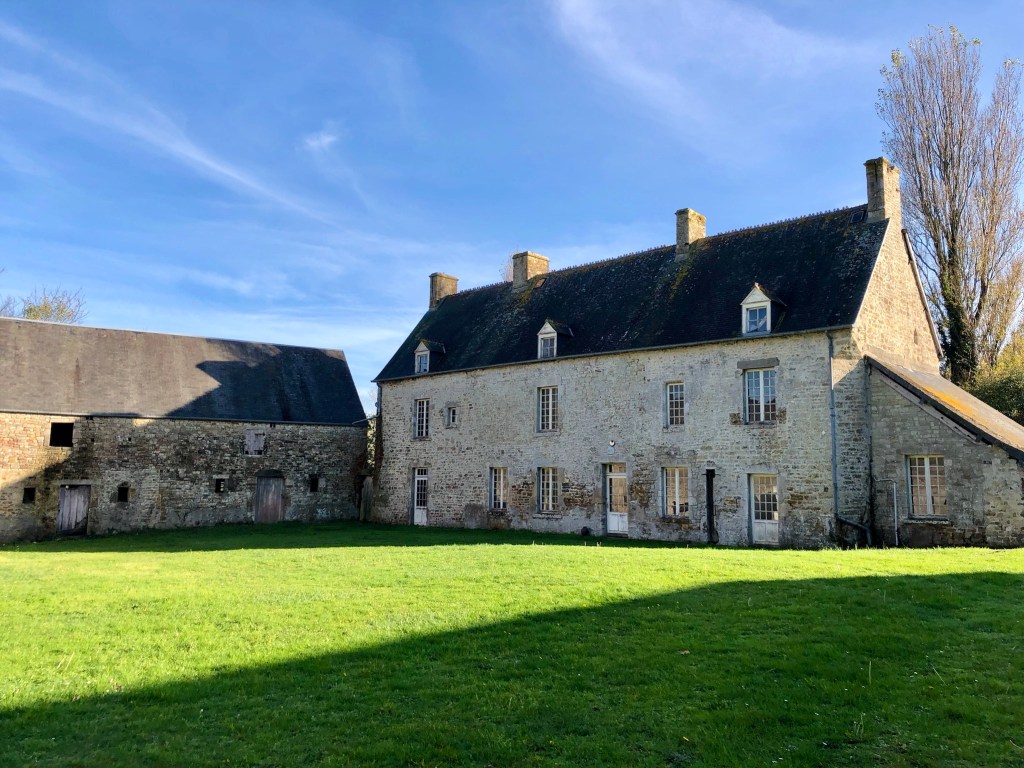
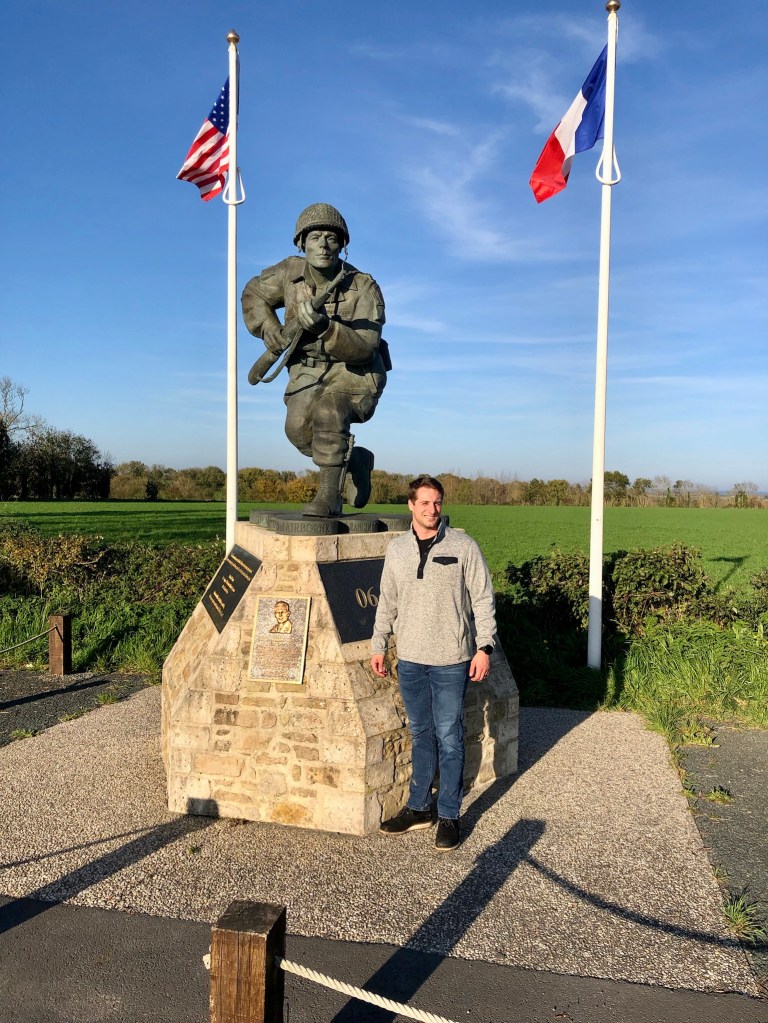
Our afternoon was entirely dedicated to following the footsteps of “Easy Company” (of the 506th Infantry Regiment), a legendary unit made famous by the series “Band of Brothers”, which we have probably watched ten times now. It is an amazing miniseries on HBO dedicated to the experiences and stories of the company. I highly recommend watching it if you have any interest in WWII history. Our first stop on this part of the tour was at Marmion farm, a rally point for paratroopers after the landings. Some of the first images seen of the war were taken in the courtyard of the farm – most famously, one of an American paratrooper holding a captured Nazi flag. Our second stop was Brécourt Manor, the site of Easy Company’s assault on German troops in a large field next to the Manor. Here, then LT Richard Winters led a small force of other Easy Company troops, ambushed, and destroyed a German gun-battery shelling Utah Beach. For their actions, Winters received the Distinguished Service Cross, the Army’s second highest award for valor, and all other soldiers received either Silver or Bronze Stars. Brécourt Manor is still owned by the same family today (currently the grandson of the owners during WWII) and is a working farm. Olivier actually has a personal relationship with the owner, so we stopped at the house and picked up some of his homemade pommeau (a drink special in the region made by mixing apple cider with Calvados, an apple brandy). Near the Manor we also made a stop to see the memorial dedicated to Major Richard Winters (1LT at the time of the landings).
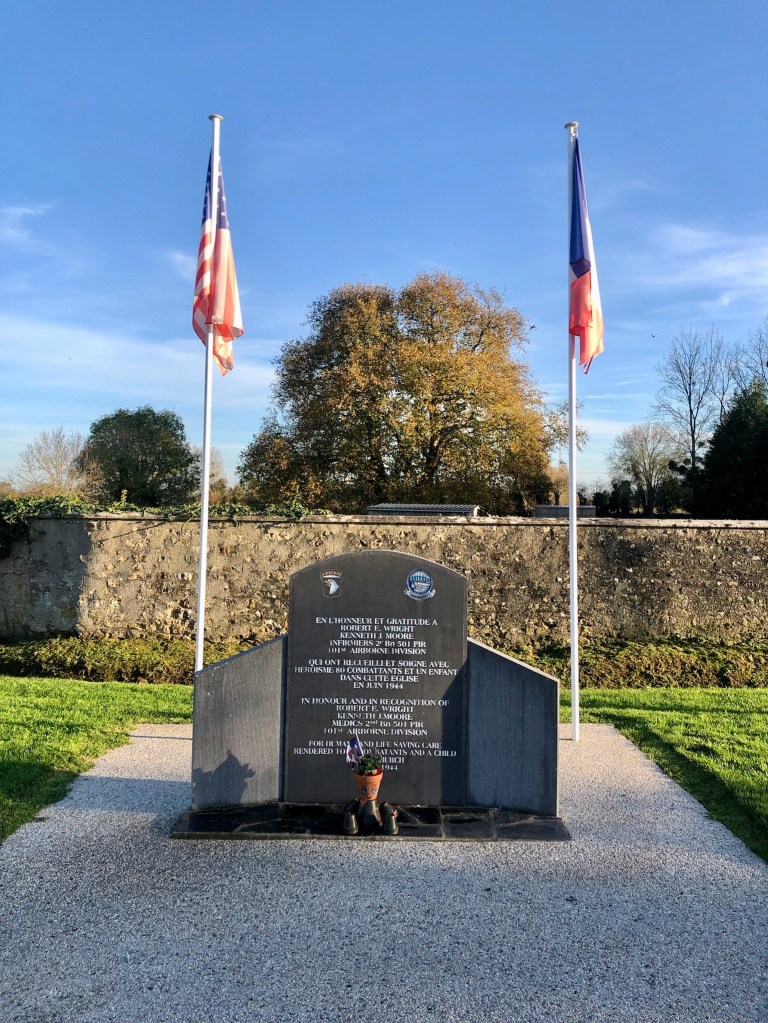
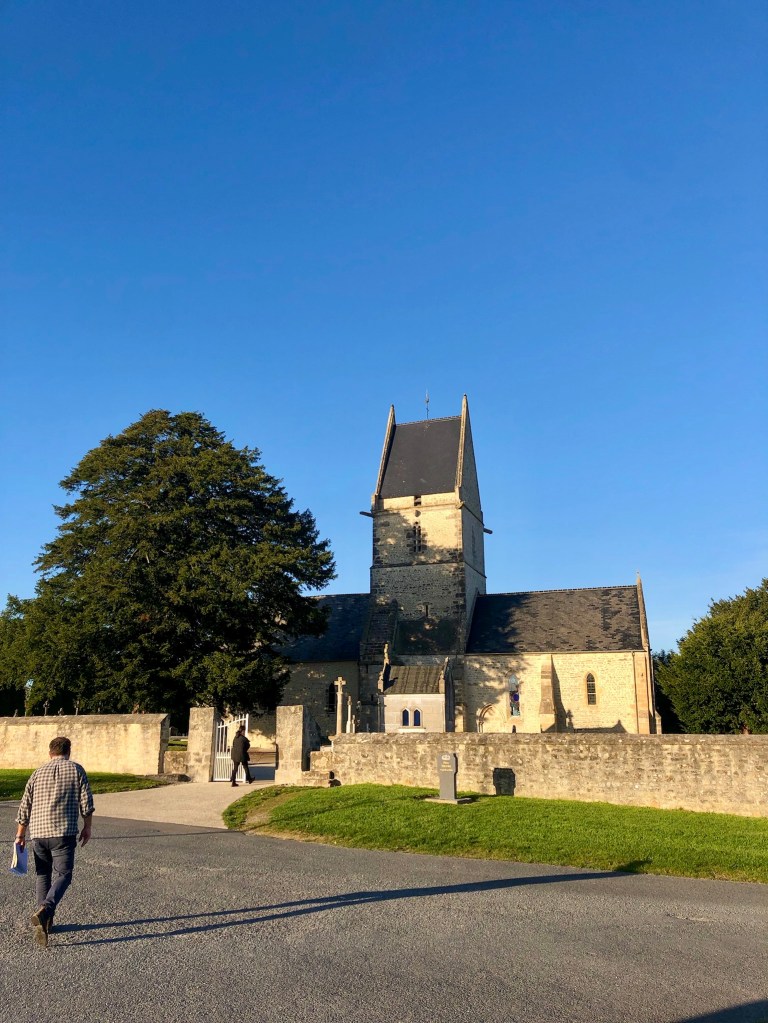
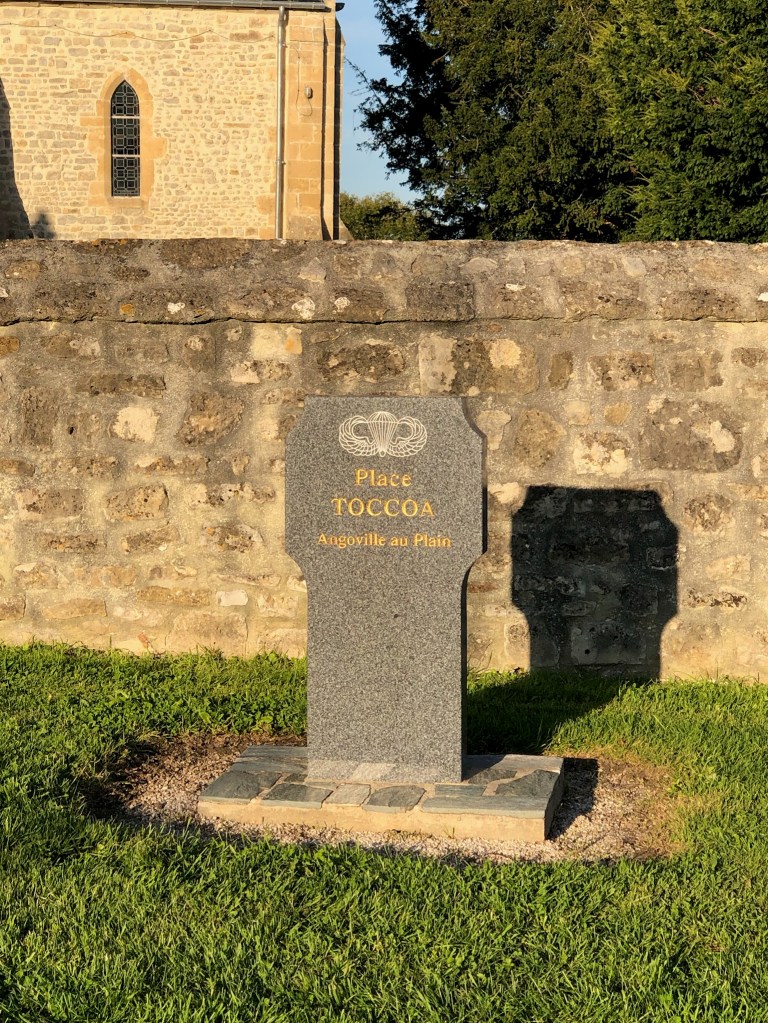
We continued on to Angoville-au-Plain, a small village whose very tiny church was used by two 101st Airborne medics as a hospital on D-Day to treat injured American and German soldiers. A couple of the pews inside remain blood-stained. There is a memorial outside the church dedicated to the two medics, Robert Wright and Ken Moore. The intersection in front of the church has since been named “Place Toccoa”, after “Camp Toccoa” in Toccoa, Georgia, the training camp for the unit prior to the war. Interestingly enough, the town had been largely forgotten by the history buffs until very recently, when the medics returned and requested to visit a small town they remembered helping injured soldiers in. Part of each of the medics’ remains are buried in the church courtyard.
Our last stop was in the town of Carentan, one of the first major objectives of Easy Company. Carentan was key as it was the link-up point for units from Utah and Omaha Beach. From Carentan, Allied Forces could continue heading east into France. Easy Company, led by LT Winters, stormed and secured the town.
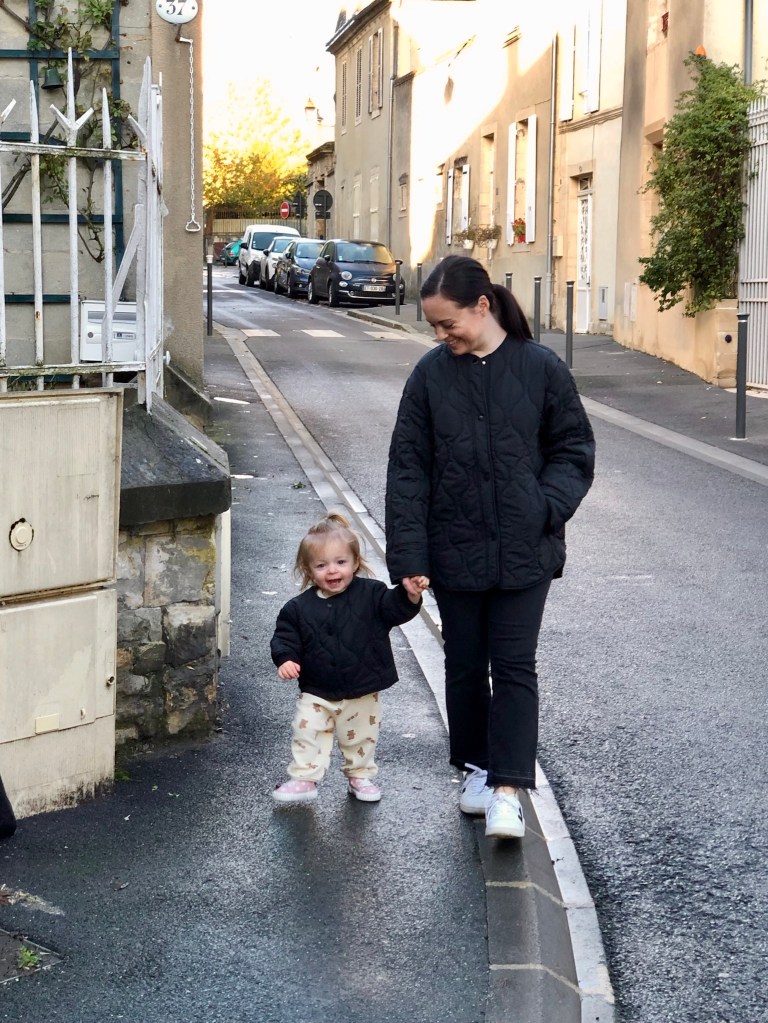
We arrived back in Bayeux around 5:30pm, a long day for sure. When we told Pascal the night before that we were doing a full day Normandy tour the next day, he smiled and kind of looked at us like we were crazy doing so with a one-year-old. I’m not going to lie, it wasn’t easy with Lucy. But, we would do it again. This tour was a truly once-in-a-lifetime experience. We’ve read about it and watched the movies, but there is nothing like seeing it in person. Experiencing these places with Lucy in tow is better than not seeing them at all! We tried to make it enjoyable for her, letting her walk around at each of the stops, but she was definitely exhausted by the time we got back.
We learned on Saturday evening that Bayeux is very, very quiet. It’s not a bad thing, but there just wasn’t much going on at all and there weren’t a ton of options for dinner. Since we were all pretty tired from the day, Michael went and picked up dinner from the store and we ended up just eating at the B&B.
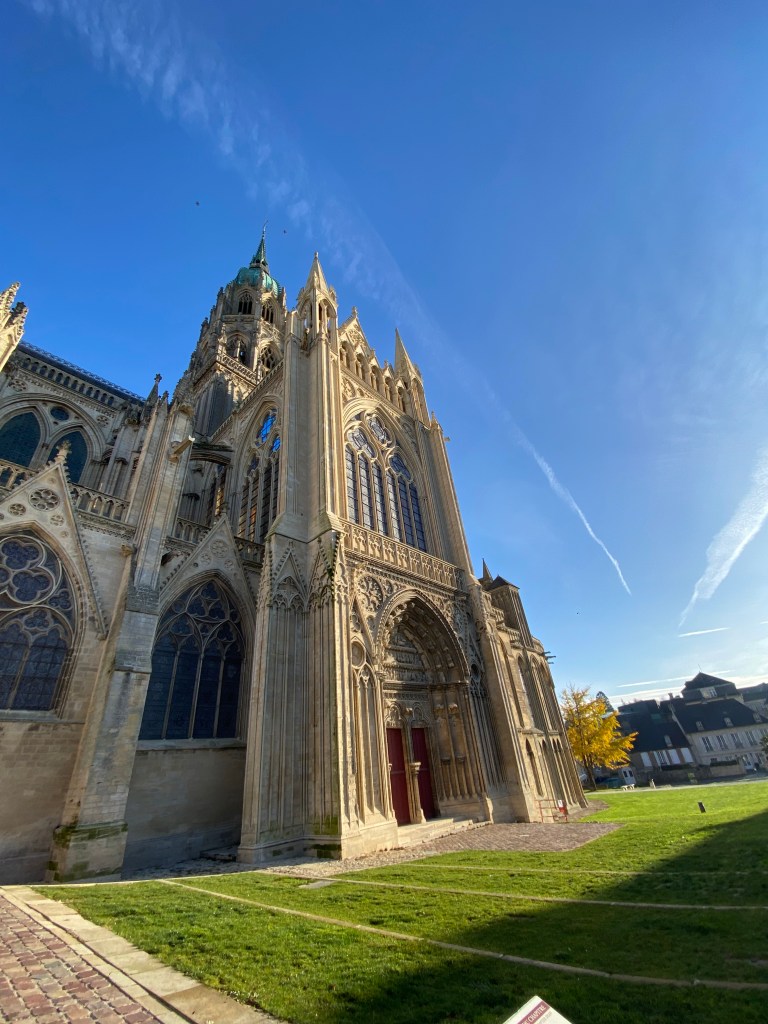
Sunday we planned to explore the town a bit. After breakfast, we started the day at Bayeux Cathedral and visited the museum that holds the Bayeux Tapestry. The Tapestry is a famous hand-embroidered cloth, over 200 feet long, that depicts the events leading up to the Norman Conquest of England in 1066, led by William, the Duke of Normandy. The Tapestry was commissioned to commemorate the events and tell the story to a largely illiterate public. It is one of the most important and famous pieces of medieval art in the world. Each visitor gets their own headset upon entering, and a narrator explains each scene. It’s basically a comic strip from almost a thousand years ago. We stopped for traditional French crepes for lunch before an afternoon nap. That evening we went back to the Cathedral to see it at night – it was beautiful in the dark only lit by candlelight. We had a great dinner at L’Alcôve, recommended by Pascal.
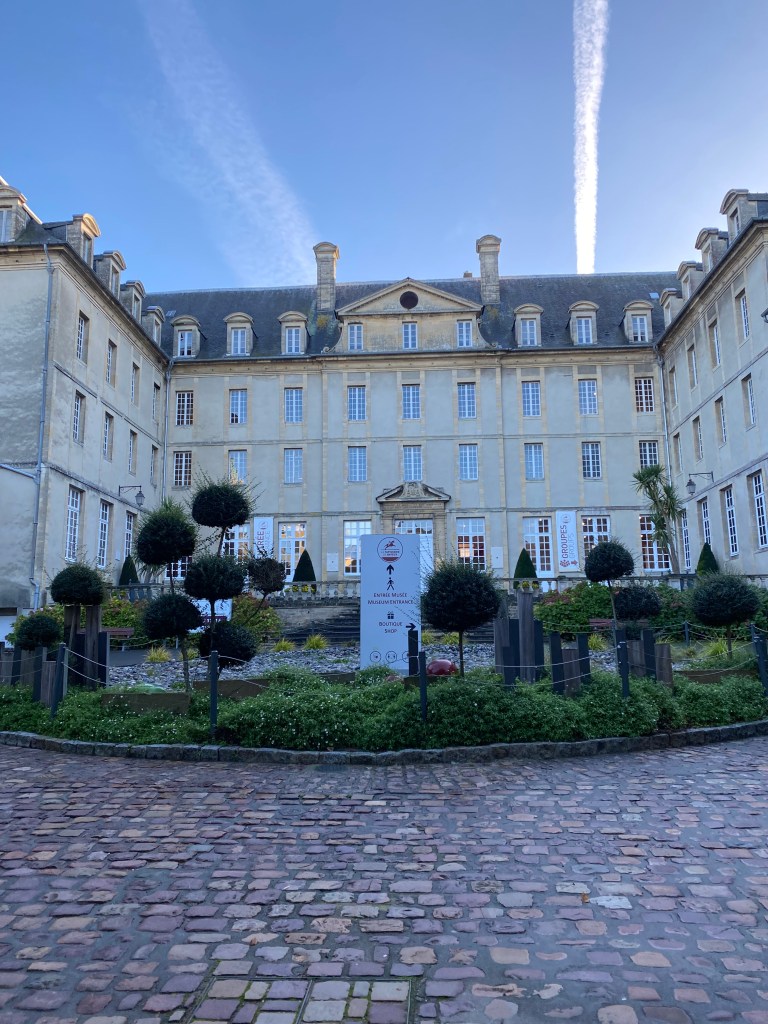
On Monday we said “au revoir” to Pascal and his beautiful home and headed to the airport for our flight back to Venice. But, be careful driving on French highways. Michael couldn’t leave without a speeding ticket – 3.5 mph over the speed limit. We didn’t know until the rental company emailed the ticket when we got home, ha!
Recommendations
Le Petit Matin B&B
L’Alcôve for dinner (must make a reservation)
Overlordtour (request Olivier for your tour, Full-day Band of Brothers private tour)


 HANNAH SHARES
Leave a reply to theresaportis Cancel reply